The Long-Term Value of Durable Luggage: The Travel Accessories Math Nobody Does

Buy cheap luggage twice. Buy durable luggage once. Most people don't do that math until they're shopping for their third suitcase in five years.
Luggage shopping usually comes down to price at the till. Rarely to cost over time. That's the gap where cheap suitcases quietly win the first purchase and lose every purchase after it. Good travel accessories aren't an expense you make once and forget. They're a decision that compounds, for better or worse, every time you fly.
What Durable Actually Means
Not all hard-shell luggage is the same.
-
They may look similar on the shelf. But the material underneath makes a huge difference.
-
ABS is the cheapest option. It is light. But it cracks more easily under impact.
-
Polypropylene sits in the middle. It flexes better and usually comes at a mid-range price.
Polycarbonate is the strongest of the three. It handles impact better and lasts longer, too.
And that difference shows with use.
Polycarbonate bends under pressure and bounces back. So it does not build up stress fractures as easily over time. ABS is different. Every hit leaves behind tiny cracks. You may not notice them at first. But they show up later.
Durable Travel Accessories Cost Less Over Time
Here's the part that never makes it onto the price tag.
A budget ABS suitcase generally runs cheaper upfront but tends to hold up for only one to two years of regular use, while a polycarbonate suitcase costs more initially and can comfortably last five years or longer.
Run that forward. Replace an ABS bag every two years, and the "savings" disappear by year four. Buy once in polycarbonate, and you're still packing the same suitcase while everyone else is shopping again.
It's not about spending more upfront. It's about spending once instead of three times.
Where Companion Fits In
This is exactly the calculation Companion built its shelves around.
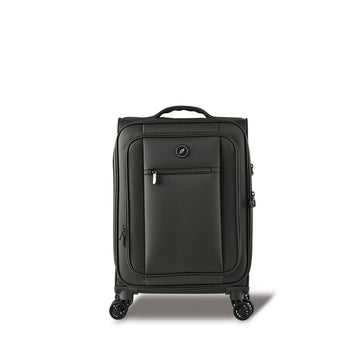
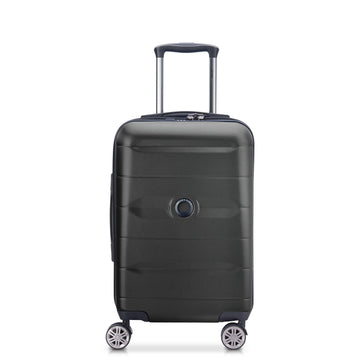
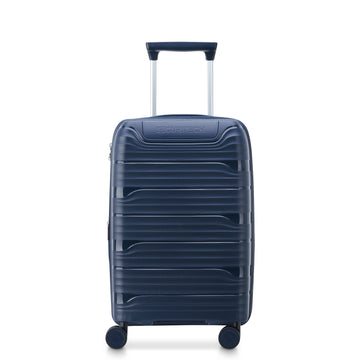
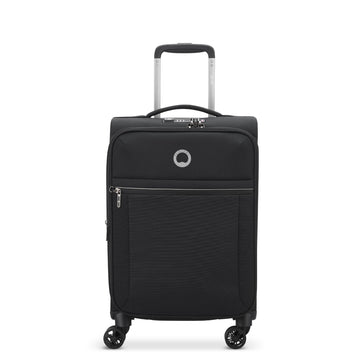
Walk into either Companion location in Karachi, and the lineup leans polycarbonate and polypropylene hard-shells from Delsey, alongside Companion's own Stallion line, rather than filling racks with disposable ABS. That's a deliberate stance, not an accident of stock.
Companion also treats travel accessories as part of the same durability equation, not an afterthought. A suitcase with a weak zipper or a snapped wheel fails just as fast as a cracked shell. Locks, scales, adapters, packing cubes: the small stuff either holds up with the big stuff or undermines it.
FAQs
Is polycarbonate luggage worth the extra cost?
Yes, for anyone flying more than a few times a year. It lasts significantly longer and resists cracking better than ABS.
How long should durable luggage last?
A well-built polycarbonate suitcase can last five years or more with regular use, compared to one to two years for a budget ABS.
What's the difference between ABS and polycarbonate suitcases?
ABS is cheaper and lighter, but cracks under impact. Polycarbonate flexes and absorbs impact, which extends its lifespan.
Are travel accessories worth investing in, too?
Yes. Weak zippers, wheels, and locks fail before the shell does, so durable accessories protect the investment in the suitcase itself.
Where can I buy durable luggage in Karachi?
Companion stocks polycarbonate and polypropylene luggage from brands like Delsey, along with matching travel accessories, at its Bukhari and Northwalk locations.
Conclusion
Cheap luggage isn't really cheap. It's just an expense spread across more receipts.
Durable travel accessories cost more once and less forever.
That's the only math that actually matters at baggage claim.